

"The people who are crazy enough to think they can change the world are the ones who do." Steve Jobs
Long sales cycle planning is critical for industrial and manufacturing companies making high-value equipment decisions. These purchases and sales rarely happen quickly. They involve multiple stakeholders, capital approval, and long-term operational consequences. When companies wait until timing forces action, decisions become rushed and value is often lost.
Organizations that plan ahead gain flexibility, clarity, and control.

Why Long Sales Cycles Require Early Planning
Industrial sales cycles move slowly because decisions are complex. Equipment purchases and asset sales require coordination across operations, finance, and leadership. Financing, valuation, and market exposure all take time.
Without early planning, companies limit their options. They may be forced to accept pricing, timing, or outcomes that do not align with business goals. Long sales cycle planning allows leaders to make decisions proactively instead of reacting under pressure.
Early planning gives leadership time to pressure-test assumptions. It allows teams to validate equipment value, confirm operational need, and understand market demand before decisions become time-bound. When planning starts late, leaders are often choosing the least disruptive option, not the best one.

🎧 Listen to our podcast episode- How Industrial Auctions Support Long Sales Cycles and Smarter Business Decisions to explore this process step-by-step and apply it to your own leadership role.
The Role of Relationship Marketing in Industrial Sales
Relationship marketing plays a central role in long sales cycles. In industrial markets, trust matters more than speed. Decisions often depend on one internal advocate who must justify the recommendation to others.
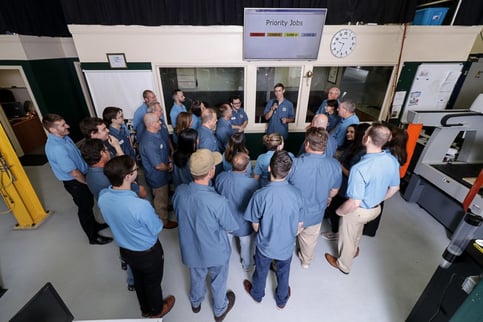
Strong relationships reduce friction during approvals and create confidence in valuation, timing, and process. When trust exists, conversations are clearer and decisions move forward with less resistance.
Trust reduces the need for excessive verification. When buyers and sellers understand the process and the people behind it, decisions move forward with fewer delays. This is especially important in capital equipment transactions where inspections, financing, and approvals can stall momentum.
Equipment Planning as a Capital Strategy
Manufacturing asset management is not only about maintenance. It is also about capital strategy. Many companies operate with underutilized equipment without understanding its impact on cash flow, floor space, or efficiency.
Equipment reviews often reveal assets that no longer align with current production goals. Holding onto equipment out of habit ties up capital and floor space. Planning forces a clearer assessment of whether ownership still makes financial sense.
Long sales cycle planning allows leaders to evaluate whether equipment should be retained, sold, or outsourced. This approach supports capital reallocation, technology upgrades, and reduced operational risk. Decisions are made based on data and long-term strategy rather than urgency.
Staying Top of Mind in Industrial Markets
Industrial purchasing does not follow a predictable timeline. A company may not need support today, but when the need arises, they contact the partner they recognize and trust.
Consistent communication, education, and relationship building ensure visibility during long gaps between decisions. In long sales cycles, familiarity often determines who gets the call.
In long sales cycles, consistency matters more than frequency. Leaders remember the partners who communicate clearly and show up over time, not those who appear only when a transaction is imminent.
A Practical Step Industrial Leaders Can Take
Once a year, conduct a structured equipment review with a trusted partner. The purpose is clarity, not immediate action. Understanding what assets support future goals and which do not improves long-term decision making.
Planning does not eliminate uncertainty, but it reduces risk. Leaders who understand their assets, timing, and options are better positioned to respond when conditions change.
Conclusion
At the end of the day, effective sales and marketing are not about pushing messages or chasing quick wins. They are about helping people make confident decisions over time. When your outreach is grounded in real value, practical insight, and a genuine understanding of what your audience is trying to accomplish, trust follows naturally.
The strongest brands we work with treat every message as part of a long-term conversation. Marketing sets the tone by educating and guiding. Sales continues that conversation with consistency, respect, and care. When both teams stay aligned around serving the buyer, relationships deepen, decisions become easier, and growth becomes more sustainable.
That is how meaningful business relationships are built, and why value-based messaging will always matter.